GTC Insight Report
Lock the Rights Before You Lock the Vector
A GTC Insight Report by Brad Salcedo and Rahul Kaushik.
Before locking an AAV platform, map rights for every component, starting with the expression plasmid (ITR-flanked cassette and its backbone), then the vector backbone, Rep/Cap plasmid and helper plasmid. Route open questions to IP/patent counsel and build a rights map, agreements inventory and dated decision record, not a legal conclusion.
Core question who actually owns each component of our vector, and on what terms are we allowed to use it and what are the risks we are carrying into the next development milestone?
Who this is for
Audience
You are a founder, CSO or CTO at a seed or Series A preclinical AAV company.
Boundary
This guide outlines key questions and diligence steps. It does not assess any patent, owner or claim, nor does it reach conclusions about whether any expression plasmid, backbone, Rep/Cap plasmid, sequence or process can be used. Every IP point below is a prompt to raise with your own IP/patent counsel.
Key findings
-
01
Rights can attach to the vector and its constructs, cell line preparation, transfection, and analytics and quality control. [1]
-
02
Expression plasmids, including backbone, and producer and helper plasmids are themselves active engineering targets. [7][8]
-
03
Material moves between labs, repositories, CROs and CDMOs under agreements with widely varying scope. [9]
-
04
Many clinical AAV programmes do not disclose the identity of the capsid the Rep/Cap plasmid encodes, and therefore not the Rep/Cap plasmid behind it, so provenance often cannot be inferred from the public record. [3]
-
05
Give every "NO" from the self-assessment one of four dispositions, with a date and an owner.
The avoidable hurdle
It is avoidable because the work is known and finite: list the components, find the document behind each, and route open questions to counsel.
We locked the vector before we mapped the rights.
The vector rights self-assessment
12 questions, 15 minutes, your current lead construct. Answer YES or NO for your current lead construct. Be strict: "probably" counts as NO. Each NO becomes a question to route to your IP/patent counsel, not a verdict.
-
1
Can we name every component of our construct (expression plasmid including the ITR-flanked cassette and its plasmid backbone, vector backbone, promoter and regulatory elements, transgene, Rep/Cap plasmid, helper plasmid, producer cell line) and identify the document that gives us rights (contractual and/or IP) to each?
NO means There are parts of the vector whose rights position is unknown to you today.
-
2
For each candidate Rep/Cap plasmid, have we decided whether we will build, license rights or engineer around third party rights, and asked counsel whether that posture fits our target tissue and indication?
NO means The Rep/Cap plasmid decision is being made on biology alone and may be hard to reverse later.
-
3
Is the chain of title for our Rep/Cap plasmid fully traced from the originating lab to us, with every assignment and licence documented?
NO means A diligence team may find a gap before you do.
-
4
Do we know whether any of the underlying work was publicly funded, and whether IP rights were retained?
NO means Government or funder rights have not been checked with counsel.
-
5
Do contractual terms relevant to our backbone and helper plasmid cover clinical and commercial use, not just research?
NO means A research use only term may be sitting in your production process.
-
6
Have we asked each plasmid supplier where the sequence originated and what terms accompany it?
NO means Provenance depends on goodwill rather than documents.
-
7
Do our MTAs, CRO and CDMO agreements clearly state who owns modified material, generated data and process inventions?
NO means Ownership of your own process improvements may be unclear.
-
8
Have we read the field of use, licensed product definition, diligence obligations and grant-back terms in each licence, not only the royalty rate?
NO means A missed milestone or a construct change could affect your rights.
-
9
Has counsel re-checked our patent and licence position since our last material construct change?
NO means The portfolio may no longer match the product.
-
10
Do we know when each relevant patent and regulatory exclusivity expire, and which extensions the licensor is willing to offer?
NO means Timing assumptions in your plan are untested.
-
11
Could we hand an investor a rights map, an agreements inventory and a log of questions routed to legal counsel this week?
NO means Diligence will start from a blank page.
-
12
Do we have a dated and witnessed decision record for each component?
NO means Decisions exist only in people's heads.
-
Zero to two NO answers
Keep the record current, and rerun this checklist at every design change.
-
Three to five NO answers
Work through Section 5 before you lock the platform.
-
Six or more NO answers
Pause the lock until counsel has reviewed your rights map.
Six steps before you lock the platform
-
Map every component before you choose between them
- Do
- list each component of each candidate construct and, for each, the source document granting your rights, or "unknown". [14]
- Why now
- This is the cheapest moment, and it turns vague concern into a short list.
- Saves you
- a blank page at diligence.
- Ask counsel
- which components are covered by agreements we hold, and which are not?
-
Map expression plasmid and backbone provenance
- Do
- start with the expression plasmid (the ITR-flanked cassette and its plasmid backbone), then the vector backbone, then ask each plasmid and helper supplier the same set of questions: sequence origin, licence basis, research use only status, reach-through or royalty terms, field of use, ownership of modifications/improvements. [7][8][5][9]
- Why now
- Expression plasmids, including their backbones, and producer and helper plasmids are active engineering targets. Where a plasmid is obtained under a licence, check scope, field of use, reserved research rights and commercial rights; where material was transferred under an MTA, check the transfer terms.
- Saves you
- a production process built on terms that do not cover the clinic.
- Ask counsel
- does what this supplier disclosed cover clinical and commercial use?
-
Choose a Rep/Cap plasmid posture and trace its provenance
- Do
- for each candidate Rep/Cap plasmid, decide whether you will build, license or engineer around third party rights, and trace the chain of title from the originating lab: inventors, employers at the time, assignments, and any public funding. [2][3][4][5]
- Why now
- The choice is hard to reverse once data accumulate on one Rep/Cap plasmid, and an in-house Rep/Cap plasmid may still encode a capsid derived from a parental serotype, library, or selection method owned by someone else. Academic origin brings reserved rights and flow-down obligations.
- Saves you
- a forced Rep/Cap plasmid change or a late licence negotiated under pressure.
- Ask counsel
- is our chain of title complete and recorded? Do any institutional or government rights attach? If we license, does the grant cover our indication, route of administration, territory and a future partner? Is an engineer-around realistic?
-
Settle ownership terms before the first CRO or CDMO campaign
- Do
- check each MTA, CRO, and CDMO agreement for ownership of modified material, generated data and process inventions, and for confidentiality of process know-how. [1][9]
- Why now
- Much of the value in these products sits in the process, and process know-how is often protected as a trade secret rather than patented. Proportionate terms protect both parties.
- Saves you
- disputes over who may use your own process improvements.
- Ask counsel
- who owns what each partner generates, and is trade secret handling defined well enough?
-
Read the whole term sheet, not only the rate
- Do
- review field of use, exclusivity and carve-outs, sublicensing, diligence and milestone obligations that can trigger loss of rights, improvement and grant back terms, territory, and how the licensed product is defined as the construct evolves. [6][5]
- Why now
- Headline economics vary widely with stage and structure, so a rate alone says little, and university licences carry institution specific reserved research rights and diligence requirements.
- Saves you
- a licence that does not fit where the programme is going.
- Ask counsel
- which obligations could forfeit this licence, and does the licensed product definition follow our construct?
-
Re-check at every design change and keep the timing in view
- Do
- at each material change (a new variant of the capsid the Rep/Cap plasmid encodes, a new promoter, a removed tag) ask counsel whether the construct is still covered and permitted, and track when each patent and exclusivity expires. [1][10][11][12]
- Why now
- Construct changes can move the product away from the rights that protect and permit it, and claims may be narrower than they look. Patents and regulatory exclusivities run on different clocks, orphan exclusivity differs between the United States and the European Union, EU incentives are under reform discussion, and how platform designation interacts with existing licences is an open question.
- Saves you
- a portfolio that no longer aligns with the product at diligence.
- Ask counsel
- has this change created a gap on the protection or the permission side?
Turn each answer into a decision record
-
01
Proceed
The documents for this component are on file, and counsel has raised no open questions.
Signed agreements and counsel's note, filed in the rights map.
-
02
Mitigate
A specific gap or obligation is known and a plan is in motion.
The plan, its owner and its due date.
-
03
Preserve an alternative
A question is unresolved, so a second Rep/Cap plasmid or backbone is kept viable.
The alternative's own rights map entry.
-
04
Pause for counsel
The question is material enough that locking the platform first would create the hurdle.
The question as routed to counsel, and the date sent.
The minimum diligence pack
Its purpose is to show the questions are identified and being worked, not to reach any legal conclusion, which remains for your counsel.
- Expression plasmid
- The plasmid that carries the ITR-flanked cassette, including its plasmid backbone, not only the sequence from ITR to ITR.
- Rep/Cap plasmid
- The manufacturing plasmid that encodes the capsid protein, including its elements. Rights diligence should target this plasmid and its elements.
- Rights map
- Component by component rights map.
- Agreements inventory
- Complete agreements inventory.
- Portfolio memo
- Short memo prepared with counsel on how the portfolio reads on the current construct.
- Open-questions log
- Log of open questions already routed to counsel.
Frequently asked questions
These answers are general information, not legal advice. They do not assess any patent, owner or claim, and they do not conclude whether an expression plasmid, backbone, Rep/Cap plasmid, sequence or process can be used. Every IP point should be evaluated with your own IP/patent counsel.
We are still preclinical. Shouldn’t vector IP be something to sort out after the round?
The documents that answer a diligence question are created (or not) when a component enters the programme, and waiting does not make them easier or cheaper to track down. Mapping components early is the lowest-cost moment to turn a vague concern into a clear set of questions for your counsel.
Our Rep/Cap plasmid works well and we engineered it in-house. Does that mean we own it outright?
Not necessarily, and this guide cannot determine that for you. An in-house Rep/Cap plasmid may still encode a capsid derived from a parental serotype, library, or selection method that originated elsewhere. Trace the chain of title and ask your IP/patent counsel whether it is complete and whether any institutional or government rights apply.
Our expression plasmid and backbone came from a trusted lab and produce good titres. Do we still need documents for them?
Yes. Titre and trust are not a substitute for the document that grants clinical and commercial rights. Ask counsel to read the licence or MTA scope, field of use and any research-only limits; this guide does not determine whether any plasmid may be used.
Why do plasmids and helper constructs matter? They are just tools.
Expression plasmids (including backbone), Rep/Cap plasmids and helper plasmids are not side tools; they are part of the construct diligence map and active engineering targets. These materials often move under agreements whose scope varies widely. Ask each supplier the same provenance questions, then ask your IP counsel whether the disclosures they provided cover clinical and commercial use.
What will an investor or pharma partner actually ask for?
Typically, they will request a summary of rights to all vector components, supported by relevant agreements. The report proposes a component-by-component rights map, an agreements inventory, a short counsel-supported portfolio memo, and a log of open questions already routed to counsel. The goal is to demonstrate that the questions have been identified and are being addressed, not to provide a legal conclusion.
If we need to license a Rep/Cap plasmid, what should we look at besides the royalty rate?
Look inside the field of use, exclusivity and carve-outs, sublicensing rights, diligence and milestone obligations, improvement and grant back terms, territory, and how the licensed product is defined as your construct evolves. Ask your IP counsel which obligations could jeopardise the licence and whether the product definition tracks your evolving construct. The same term-sheet questions apply when the licensed material is an expression plasmid, backbone, Rep/Cap or helper construct.
Who owns the data and process improvements our CRO or CDMO generates?
Whatever your agreements say, which is why they should be reviewed before the first campaign. Ask your IP counsel who owns what each partner generates and whether trade secret handling is defined clearly enough.
We changed the promoter (or the variant of the capsid the Rep/Cap plasmid encodes) since our last IP review. Does that matter?
It can. Construct changes may move the product outside the specific rights that protect and permit it. Make a re-check with IP counsel part of every material design change, and ask whether the modification has created a gap on either the protection or permission side.
Do regulatory exclusivities replace the need to think about patents?
No. Patents and regulatory exclusivities run on different timelines, and orphan exclusivity differs between the United States and the European Union. Track when each relevant patent and exclusivity expires and ask your IP counsel how they work together for your programme.
What is the real cost of finding a rights gap late?
It shows up as time, money, risk and reduced investor confidence. Disclosed licensing deals for the Rep/Cap plasmid that encodes the capsid can reach tens of millions of US dollars upfront, and programmes have stalled when existing IP could not be accessed or licensed. Each of these issues is easier to manage while alternatives are still on the table.
We scored several "NO" answers on the self-assessment. Should we stop work?
Not automatically. Assign each "NO" a dated disposition with an owner: proceed, mitigate, preserve an alternative, or pause for IP counsel. Pause only for questions material enough that locking the platform first would create an avoidable hurdle.
References and important information
- Canter B, Sussman S, Colvill S, et al. Introducing biosimilar competition for cell and gene therapy products. Journal of Law and the Biosciences. 2024;11(2):lsae015. doi:10.1093/jlb/lsae015.
- Xu X. Strategies of AAV capsid engineering for targeted delivery to brain, muscle, and retina. Frontiers in Molecular Biosciences. 2026;12:1750807. doi:10.3389/fmolb.2025.1750807.
- Park KS, Cho YI, Mitragotri S, Zhao Z. Viral vector-based gene therapies in the clinic: an update. Bioengineering & Translational Medicine. 2026;11(1):e70106. doi:10.1002/btm2.70106.
- Sarpatwari A, Kesselheim AS, Cook-Deegan R. The Bayh-Dole Act at 40: accomplishments, challenges, and possible reforms. Journal of Health Politics, Policy and Law. 2022;47(6):879-895. doi:10.1215/03616878-10041247.
- Drozdoff V, Fairbairn D. Licensing biotech intellectual property in university-industry partnerships. Cold Spring Harbor Perspectives in Medicine. 2015;5(3):a021014. doi:10.1101/cshperspect.a021014.
- Shah P, Vaughan G, Ledley FD. Comparing the economic terms of biotechnology licenses from academic institutions with those between commercial firms. PLOS ONE. 2023;18(3):e0283887. doi:10.1371/journal.pone.0283887.
- Radukic MT, Le DT, Freudenberg R, et al. Engineering of high-yield recombinant adeno-associated virus producer plasmids. Biotechnology Journal. 2026;21(1):e70179. doi:10.1002/biot.70179.
- Hu S, Chen Y, Wu C, et al. Combined plasmid redesign and transfection optimization significantly increases upstream AAV titers while maintaining vector quality and in vivo potency. Microorganisms. 2026;14(8):1857. doi:10.3390/microorganisms14081857.
- Bubela T, Guebert J, Mishra A. Use and misuse of material transfer agreements: lessons in proportionality from research, repositories, and litigation. PLOS Biology. 2015;13(2):e1002060. doi:10.1371/journal.pbio.1002060.
- Costa E, Ross JS, Kesselheim AS. Orphan designation for drugs approved in the United States and European Union: a comparative analysis. Clinical Pharmacology & Therapeutics. 2026;120(3):713-720. doi:10.1002/cpt.70349.
- Stevens H, Siotis G, Castanheira M, et al. Rebalancing innovation, affordability, and access for orphan drugs in the European Union. The Lancet Regional Health, Europe. 2026;68:101778. doi:10.1016/j.lanepe.2026.101778.
- Han Y, Ormond KE. Perspectives on the FDA platform technology designation program for the approval of gene therapies: a Swiss multi-stakeholder exploratory interview study. Orphanet Journal of Rare Diseases. 2025;20(1):514. doi:10.1186/s13023-025-04038-y.
- Barrett D, Cannon PM, Mingozzi F, et al. Overcoming barriers to commercially pre-viable gene and cell therapies for rare and ultra-rare diseases. Molecular Therapy. 2025;33(11):5316-5326. doi:10.1016/j.ymthe.2025.09.049.
- Wenck A, Kershen DL. Basic intellectual property for scientists: what is it, what to look for, and how to avoid pitfalls. New Phytologist. 2025;247(1):40-49. doi:10.1111/nph.70147.
This guide is general information only. It is not legal, regulatory, medical, investment or tax advice, and it does not assess any patent or offer any legal conclusion about the use of any technology. No outcome is guaranteed. Information is current as at October 2026.
Get the full report free
Complete the form below to get the full report.
Your download has started
Join the GTC Expert Network to access all resources in one placeAbout the authors
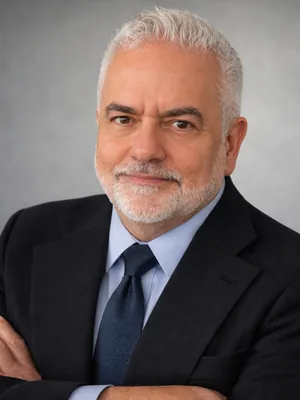
Brad Salcedo, Esq.
Biotech legal and IP strategy consultant
Brad Salcedo contributes expertise from GTC's network.
Brad is a biotech legal and intellectual property executive with more than 30 years of experience. From 2015 to 2026 he was Vice President, Intellectual Property at Ipsen, leading global IP and legal strategy and negotiating CRO, CMO, licensing and co-development agreements. Earlier he was Chief Patent Counsel at bioMérieux and held IP roles at Syngenta and Genzyme. He is a licensed attorney and registered to practice before the U.S. Patent & Trademark Office. His contribution reflects general experience and is not legal advice.
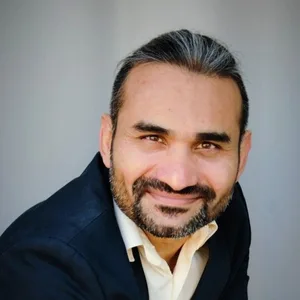
Dr. Rahul Kaushik
Founder and CEO, Gene Therapy Consultancy
He has about 18 years of professional experience, about 15 of them in viral vector therapies, first in academia and then in three biotech companies. A neuroscientist with a PhD, he worked in neurodegenerative diseases, gene silencing, and lentiviral and AAV vectors. He helps cell and gene therapy teams remove the avoidable hurdles between promising science and therapies that reach patients. He has more than 20 peer-reviewed publications, including work in Science, Cell, Nature Communications, Science Advances and The EMBO Journal.
Let's talk, in confidence if needed
Use the GTC contact form to get in touch about your programme.
Contact Gene Therapy Consultancy