GTC Insight Report
Qualified Equipment, Unready Habits: The Avoidable Hurdle Before Your First CDMO Run
A GTC Insight Report, authored by Cesyen Cedeño and Rahul Kaushik
Before your first CDMO run, the hurdle that catches most small preclinical teams is usually not the science but the habits behind records, changes and decisions. This report sets out a 14-question self-assessment, five signs that show whether you have a habits gap or a documentation gap, and a 90-day sequence to close it before the quality agreement or IND is due. It is written for founders, CSOs and CTOs at small, funded cell and gene therapy companies.
Core question Is our science ready to transfer, and are our records and habits ready for the first CDMO run?
Who this is for
Audience
You are a founder, CSO or CTO at a funded preclinical cell or gene therapy company of 2 to 20 people, or the first quality or operations person working alongside them. Your first CDMO run, quality agreement or IND is 6 to 18 months away. Your science is ready to transfer. You are less sure your records and habits are.
Boundary
This guide is general information on records, habits and CDMO quality-agreement readiness. It does not replace a qualified quality function, and it does not set a regulatory strategy. Composite examples are not a real company, site or client.
Key findings
-
01
Most cell and gene therapy companies start in academic labs, where GMP compliance is the most frequently reported challenge in moving to clinical development and GMP expertise is often limited. [1]
-
02
A quality agreement cannot delegate the product owner's GMP responsibilities: the owner's quality unit stays responsible for approving or rejecting product made by a contract facility. [3]
-
03
The avoidable hurdle before the first CDMO run is habits, not equipment. You do not need a commercial QMS. You need the right few habits, start cultivating from now. [6][9]
-
04
Irreproducible preclinical research has been estimated at about US$28 billion a year in the United States, though not all of that is a records problem, and data integrity remains a recurring theme in FDA warning letters. No published figure exists for the effect on investor confidence in this setting. [5][7]
-
05
Leadership has to go first. In a small team people copy the founders, and later systems are ignored if the recording and change rules are not modelled visibly. [10][8][11][12]
The avoidable hurdle
GMP readiness is mostly behaviour, and behaviour is cheapest to build when the team is small. With eight people, one conversation and one changed habit can reach everyone in a week. With forty people, a CDMO contract and an IND clock running, the same change takes a programme. The fix is known and regulators expect it to be proportionate. EU GMP for advanced therapies accepts that the effort to assure quality steps up gradually as knowledge of the product grows, while asking that changes during development are documented [6]. FDA guidance for phase 1 investigational drugs likewise applies quality control principles in a way that fits early clinical manufacture [9]. You do not need a commercial QMS. You need the right few habits, start cultivating from now.
We qualified the equipment, not the habits.
The readiness self-assessment
14 questions, 15 minutes, scored with your team. Answer yes or no for how your team works today. Think of a busy Friday afternoon, not how you would like it to work. Count your no answers.
-
1
If a CDMO asked tomorrow which lot of a critical reagent went into a given vector batch, could you answer from records, not memory?
NO means traceability lives in people's heads.
-
2
Are key experimental records dated, attributable and written at the time, rather than reconstructed later?
NO means data may need to be repeated for IND.
-
3
Is there one agreed place for each type of record, rather than notebooks, spreadsheets and personal drives?
NO means nobody can find the master version.
-
4
Have you recorded suppliers and critical materials, with certificates of analysis on file?
NO means your CDMO will build it for you, on your time.
-
5
Can you show which version of a protocol was used for a given experiment, test, assay and/or study?
NO means you have no document control yet.
-
6
When a protocol changes, is the change written down, with a reason, before it is used?
NO means you have no change control habit.
-
7
Does someone record a deviation or unexpected result without being asked?
NO means problems surface late, if at all.
-
8
Can anyone on the team admit a mistake or a doubtful reading without fear of blame?
NO means you will not hear about problems in time.
-
9
Are training records kept for the methods people actually run?
NO means you cannot show who was competent to do what.
-
10
Are records just as complete when the founder is travelling?
NO means quality depends on who is watching.
-
11
Do the founders follow the same recording rules they ask of the team?
NO means the team will follow what you do, not what you say.
-
12
Does one named person own quality and documentation, even part time?
NO means it is nobody's job.
-
13
Have you read a draft CDMO quality agreement and checked what it expects from you as the sponsor?
NO means the first surprise will come during onboarding.
-
14
Could you hand an investor or IND reviewer your development history and stand behind every date in it?
NO means diligence will find the gaps before you do.
-
Solid ground
You are building on solid ground. Use the 90-day sequence in Section 6 to keep it that way as the team grows.
-
A habits hurdle
Your hurdle before the first CDMO run is probably habits, not paperwork, and it is cheaper to fix now than later.
Imagine if you did it this way
-
Leadership goes first
- Do
- The founders adopt the recording, review and change rules themselves, first and visibly. They thank people who report problems, and admit their own errors. [10][8][11][12]
- Why now
- In a small team, people copy the founders. ICH Q10 states that leadership is essential to a company-wide commitment to quality and that management should demonstrate strong and visible support for it [10]. PIC/S guidance asks management to lead by example and demonstrate the behaviours they expect [8]. Psychological safety, a shared belief that the team is safe for interpersonal risk, supports team learning [11], and its link to safety improvement is stronger when speaking up is matched by collaborative problem solving [12].
- Saves you
- Every later step depends on this one. Without it, systems are bought and then ignored.
- Ask counsel
- Who on this team will model the recording and change rules first, and how will reporting a problem be received?
-
Pick one log
- Do
- Choose one record that matters to a CDMO, such as the critical reagent and sample log, and move it off paper or a personal spreadsheet into one shared, controlled, fit-for-stage system. Agree who records what and when, and who reviews it. [13][8][4]
- Why now
- One log is small enough to finish and visible enough to change habits. When a computerised system replaces a manual operation, EU GMP Annex 11 sets the principle that there should be no decrease in quality or control [13], and PIC/S guidance discourages hybrid paper and electronic systems where they can be replaced [8]. An Australian academic team translating a CAR T product described a minimum suite of quality tools that starts with exactly this kind of record: supplier registers, a materials list with certificates of analysis, document control and a tracking system for material receipt, storage and use [4].
- Saves you
- The first CDMO question about lots and traceability is answered from one place. The team learns, on one record, what good recording feels like.
- Ask counsel
- Which one record that a CDMO will ask for can move into a single shared, controlled system first?
-
A 90-day sequence to quality agreement readiness
- Do
- Days 1 to 14: Name one owner for quality, even part time. Run the self-assessment. Start the first log. Days 15 to 60: Add simple change control (write it down, with a reason, before you use it) and a deviation habit (write up the unexpected, without blame). Set up a basic document hierarchy: policy, procedures, records. Start training records for the methods people run, which another team recommends keeping from the start [4]. Days 61 to 90: Review a draft CDMO quality agreement against what you now have. List the gaps you will close before signing. [4]
- Why now
- Why this order: habits before tools, one record before many, and the quality agreement last, so you read it with evidence in hand.
- Saves you
- You read the draft quality agreement with evidence in hand, and list gaps before you sign.
- Ask counsel
- What does a draft CDMO quality agreement expect from you as the sponsor, and which gaps will you close before signing?
Turn each answer into a decision record
-
01
Solid ground
The self-assessment scores 0 to 2 no answers.
You are building on solid ground. Use the 90-day sequence in Section 6 to keep it that way as the team grows.
-
02
A habits hurdle
The self-assessment scores 3 or more no answers.
Your hurdle before the first CDMO run is probably habits, not paperwork, and it is cheaper to fix now than later.
-
03
Habits have taken hold
After year one, the first log is used by everyone and reviewed on schedule, unexpected results are written up by the person who found them, and CDMO or auditor questions are answered from records within days.
Early warnings from Section 7: parallel spreadsheets reappear; deviations are found only at review, or not at all; questions are answered from memory, or by repeating work; a first quality hire spends the first months on cleanup.
The minimum diligence pack
The 14-question self-assessment is for a team to score itself in about 15 minutes. It is a starting record of where habits stand, not a certification of GMP or CDMO readiness.
- Habits gap
- A gap in behaviour rather than in templates: records written after the fact, changes used before they are documented, or unexpected results repeated quietly instead of written up. Templates fix a documentation gap; they do not fix this.
- ALCOA
- Guidance describes good records as attributable, legible, contemporaneous, original and accurate. Contemporaneous is usually the first of these to slip.
- Quality agreement
- The contract with a CDMO that sets out quality responsibilities. FDA guidance states that it cannot be used to delegate the product owner's GMP responsibilities.
- CDMO
- A contract development and manufacturing organisation. Its GMP system covers its own facility; the sponsor still has to bring records, traceability and decisions.
- Change control habit
- Writing a protocol change down, with a reason, before it is used, rather than improving the method at the bench and letting the document catch up later.
Frequently asked questions
These answers are general information from the sources in the report. They are not legal, regulatory or quality advice, and they do not decide what is right for a given programme.
Our CDMO runs under GMP. Isn't quality their job, not ours?
Only partly, and assuming otherwise is one of the most common avoidable hurdles. FDA guidance on quality agreements states that the product owner's quality unit stays responsible for approving or rejecting product made by a contract facility, and that a quality agreement cannot be used to delegate GMP responsibilities [3]. The CDMO brings its system; you still bring your own records, traceability and decisions.
We are under 20 people. Do we really need a QMS now?
Not a commercial one. Regulators expect quality effort to step up gradually as product knowledge grows [6], and FDA applies quality control principles in a way that fits early clinical manufacture [9]. What you need now is a few right habits: one owner for quality, controlled records, change control and a deviation habit. An academic CAR T team describes exactly this kind of minimum suite of quality tools [4].
Why does this matter before our first CDMO run rather than after the raise?
Because habits are cheapest to build while the team is small, and because early data has to hold up later. EU GMP for advanced therapies asks for a functional quality system for investigational products so that data from early phases can be used in later phases [6]. Planning record keeping and document control around the eventual dossier from the start reduces dossier effort and the risk of late data gaps [4].
What is the difference between a habits gap and a documentation gap?
A documentation gap is missing templates or procedures, and templates fix it. A habits gap is about behaviour: records written after the fact, changes made before they are documented, unexpected results repeated quietly instead of written up. Good records are attributable, legible, contemporaneous, original and accurate (ALCOA) [8], and contemporaneous is usually the first to slip. The five signs in Section 4 help you tell which gap you have.
Where should we start if we can only do one thing?
Start with leadership, then one log. Founders adopting the recording and change rules first and visibly matters because ICH Q10 treats leadership as essential to a company-wide commitment to quality [10], and PIC/S asks management to model the behaviours it expects [8]. Then move one record that matters to a CDMO, such as the critical reagent and sample log, into one shared, controlled system [4].
Should we buy an electronic system (eQMS or ELN) right away?
A system alone will not change habits. If you do move a manual record into a computerised system, EU GMP Annex 11 sets the principle that there should be no loss of quality or control [13], and PIC/S guidance discourages hybrid paper and electronic systems where they can be replaced [8]. Choose something fit for your stage and start with one record, not everything at once.
How do we get people to report mistakes and unexpected results?
Make it safe to do so. Psychological safety, a shared belief that the team is safe for interpersonal risk, supports team learning [11], and its link to improvement is stronger when speaking up is met with collaborative problem solving [12]. In practice, founders thank people who report problems and admit their own errors.
What does a lack of record discipline actually cost?
Mostly time and repeat work: weeks reconstructing histories during onboarding and experiments repeated when early data cannot be traced. At a wider scale, irreproducible preclinical research has been estimated at about US$28 billion a year in the United States [5], though not all of that is a records problem. Data integrity also remains a recurring theme in FDA enforcement, as an analysis of 1,766 warning letters shows [7]. No published figure exists for the effect on investor confidence in this setting.
Why do so many young cell and gene therapy companies face this hurdle?
It is structural, not anyone's fault. Many start in academic labs, where GMP compliance is the most frequently reported challenge in moving to clinical development and GMP expertise is often limited [1]. Most academic programmes also do not consistently prepare people to work inside regulated quality systems [2].
Does following this approach replace a quality professional or regulatory advice?
No. It builds the habits your first quality hire and your CDMO can build on, but it does not replace a qualified quality function as you approach GMP manufacture, and it does not set your regulatory strategy. What is right for you depends on your modality, your CDMO and your regulators.
References and important information
- Van Isterdael C, Mugarza E, Fischer P, et al. Why advanced therapy medicinal products struggle in clinical translation: an in-depth analysis of developmental challenges in the EU. Front Med (Lausanne). 2026;13:1839531.. PMID 42311903. doi:10.3389/fmed.2026.1839531.
- Shokoohmand A, Tan EHP, Al-Riyami AZ, et al. From classroom to cleanroom: building a skilled cell and gene therapy workforce. Cytotherapy. 2026;28(11):102899.. PMID 42696793. doi:10.1016/j.jcyt.2026.102899.
- US Food and Drug Administration. Contract Manufacturing Arrangements for Drugs: Quality Agreements. Guidance for industry. November 2016. https://www.fda.gov/media/86193/download
- Tan RPA, Walsh R, McCowage G, O'Neill GM, Gowrishankar K. Navigating CAR-T translation in Australia: lessons from an academic program. Front Med (Lausanne). 2026;13:1920197.. PMID 42638869. doi:10.3389/fmed.2026.1920197.
- Freedman LP, Cockburn IM, Simcoe TS. The economics of reproducibility in preclinical research. PLoS Biol. 2015;13(6):e1002165.. PMID 26057340. doi:10.1371/journal.pbio.1002165.
- European Commission. EudraLex Volume 4, Part IV: Guidelines on Good Manufacturing Practice specific to Advanced Therapy Medicinal Products. Brussels: European Commission; 22 November 2017. https://health.ec.europa.eu/system/files/2017-11/2017_11_22_guidelines_gmp_for_atmps_0.pdf
- Park Y, Kwon K. Trends in FDA data integrity enforcement before and after the COVID-19 pandemic: an analysis of 1766 warning letters (2016-2023). Ther Innov Regul Sci. 2026;60(1):190-198.. PMID 41071512. doi:10.1007/s43441-025-00870-3.
- Pharmaceutical Inspection Co-operation Scheme. PI 041-1: Good Practices for Data Management and Integrity in Regulated GMP/GDP Environments. Geneva: PIC/S; 1 July 2021. https://picscheme.org/docview/4234
- US Food and Drug Administration. Current Good Manufacturing Practice for Phase 1 Investigational Drugs. Guidance for industry. July 2008. https://www.fda.gov/media/70975/download
- International Council for Harmonisation. ICH Q10: Pharmaceutical Quality System. Step 4 version, 4 June 2008. https://database.ich.org/sites/default/files/Q10%20Guideline.pdf
- Edmondson AC. Psychological safety and learning behavior in work teams. Adm Sci Q. 1999;44(2):350-383. doi:10.2307/2666999.
- Bahadurzada H, Kerrissey M, Edmondson AC. Healthcare (Basel). 2024;12(8):812.. PMID 38667574. doi:10.3390/healthcare12080812.
- European Commission. EudraLex Volume 4, Annex 11: Computerised Systems. Brussels: European Commission; January 2011, in operation from 30 June 2011. https://health.ec.europa.eu/medicinal-products/eudralex/eudralex-volume-4_en
This report is for general information only. It is not legal, regulatory, medical, investment or tax advice, and it does not guarantee any outcome. Information is current as of October 2026.
Get the full report free
Complete the form below to get the full report.
Your download has started
Join the GTC Expert Network to access all resources in one placeAbout the authors
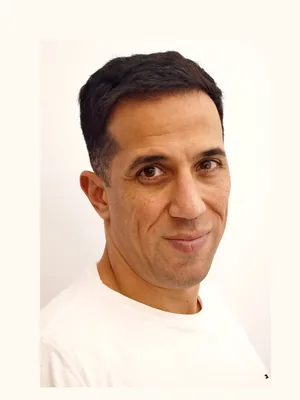
Cesyen Cedeño, PhD
Biotech operations and CMC leader, GMP biologics and ATMPs
Cesyen Cedeño contributes expertise from GTC's network.
Cesyen has built his career on the production floor, where GMP is won or lost. He led GMP production at the Vector Development Unit of Vrije Universiteit Brussel, building a quality management system with QA, and earlier manufactured GMP lentiviral vectors for CAR T programmes at GeneVector in Barcelona. Since 2023 he has advised biotech companies on CMC documentation and manufacturing readiness. He holds a PhD in Bioengineering from VUB.

Dr. Rahul Kaushik
Founder and CEO, Gene Therapy Consultancy
He has about 18 years of professional experience, about 15 of them in viral vector therapies, first in academia and then in three biotech companies. A neuroscientist with a PhD, he worked in neurodegenerative diseases, gene silencing, and lentiviral and AAV vectors. He helps cell and gene therapy teams remove the avoidable hurdles between promising science and therapies that reach patients. He has more than 20 peer-reviewed publications, including work in Science, Cell, Nature Communications, Science Advances and The EMBO Journal.
Let's talk, in confidence if needed
Use the GTC contact form to get in touch about your programme.
Contact Gene Therapy Consultancy